


Page 33 - A. Aging
P. 33
Standardization of visual phenotype in aging mice
                                                              2
                                Hae-Sol Shin  1,2,*  ; Jinu Han, MD  ; Hong Kyung Kim ; Yejin Cho  ; Soo Jung Han  ;
                                                                              1
                                                                     4
                                                  3,*
                                                          5
                                              1
                                                                   4
                                 1,6
                           Jiyeon Kim  ; Jihei Sara Lee, MD  ; Hyoung-Chin Kim  ; Ki Taek Nam  ; *Kyoung Yul Seo, MD  1,2,6,**
                                 1 Department of Ophthalmology, Severance Hospital, Institute of Vision Research, Yonsei University College of Medicine, Seoul, Korea
                                    2 Korea Mouse Sensory Phenotyping Center (KMSPC), Yonsei University College of Medicine, Seoul, Republic of Korea
                               3Department of Ophthalmology, Gangnam Severance Hospital, Institute of Vision Research, Yonsei University College of Medicine, Seoul, Korea
                                4 Severance Biomedical Science Institute, Brain Korea 21 PLUS Project for Medical Science, Yonsei University College of Medicine, Seoul, Korea
                                  5 Laboratory Animal Resource Center, Division of Bioinfrastructure, Korea Research Institute of Bioscience and Biotechnology
                                        6 Brain Korea 21 Plus Project for Medical Science, Yonsei University, Seoul, Republic of Korea
                                               *These two authors contributed equally.
                     BACKGROUND                                                AIM
    Age is the most important risk factor for various eye disorders such as dry eye  Increased concerns about the effect of aging on the sensory organs
   syndrome, cataract, age-related macular degeneration, and glaucoma.  necessitate standardized and detailed characterization of normal visual
                                                        function. Applying methods used in clinical practice is one of the best ways to
   Visual function continuously declines with age. For instance, the number of
   neurons in the retina decreases, leading to the loss of visual acuity and sensitivity.  correlate human and mouse phenotype data.
   A  decrease  in  amplitudes  on  electroretinograms(ERG)  and  structural  In this study, we analyzed the virtual optokinetic movement, biomicroscopic
   abnormalities related to photoreceptor cell death with normal aging have also  lens photos, ERG, and retinal thickness in mice to present the standard
   been observed in both animal and human studies.      phenotypes of aged mice.
                                                 METHODS
   Animals                                              Optical Coherence Tomography(OCT)
   For analysis, both male and female C57BL/6J mice at 16 weeks (n=4), 48 weeks (n=10), and  OCT scans were taken using  the Micron® IV (Phoenix  Research
   96 weeks (n=5) were obtained. Mice were provided from the Korea Mouse Phenotyping  Labs, Pleasanton, CA, USA). After anesthesia,Fundus photographs
   Center.                                              and OCT scans were acquired. The retinal thickness was  measured
                                                        using the InSight- Animal OCT Segmentation Software (Phoenix
   Optokinetic nystagumus(OKN)                          Research Labs, CA, USA).
                 Visual acuity were measured  by optokinetic nystagumus(OKN) using   Electroretinogram (ERG)
                 a virtual optokinetic system (OptoMotry, Cerebral Mechanics,
                 Medicine Hat, Alberta, Canada).A video camera connected to a   ERG was recorded using Micron  Ganzfeld ERG (Phoenix
                 computer was placed on the ceiling of the device for recording. The   Research Labs, Pleasanton CA, USA). Mice were placed in a dark
                 gratings moved in either right or left directions so that a clockwise   environment for at least 12 hours for dark adaptation prior to
                 rotation generated tracking in the left eye while a counterclockwise   scotopic testing (Rod cell response). Scotopic ERGs in response
                 rotation tested tracking in the right eye.          to increasing flash intensities were obtained, ranging from -1.7 log
                                                                     cd·s/m2 to 1.9 log cd·s/m2. Photopic ERGs were then obtained
                                                                     with increasing flash intensities, ranging from -0.5 log cd·s/m2 to
                                                                     4.1 log cd·s/m2. Ten responses to light stimulation were averaged.
                                                 RESULTS
            ▣ Morphological examination    Figure 1                         Figure 3
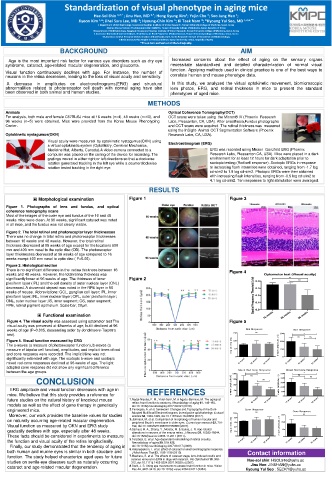
   Figure 1. Photographs of lens and fundus, and optical
   coherence tomography scans
   Most of the images of the outer eye and fundus of the 16 and 48
   weeks mice were clean. At 96 weeks, significant cataract was noted
   in all mice, and the fundus was not clearly visible.
   Figure 2. The total retinal and photoreceptor layer thicknesses
   There was no change in total retina and photoreceptor thicknesses
   between 16 weeks and 48 weeks. However, the total retinal
   thickness decreased at 96 weeks of age except for the locations 600
   mm and 400 mm nasal to the optic disc (OD). The photoreceptor
   layer thicknesses decreased at 96 weeks of age compared to 16
   weeks except 400 mm nasal to optic disc ( P<0.05).
   Figure 3. Histological section
   There is no significant difference in the  retina thickness between 16   Figure 4
   weeks and 48 weeks. However, the total retina thickness was
   significantly lower at 96 weeks of age. The thickness of inner   Figure 2
   plexiform layer (IPL) and the cell density of outer nuclear layer (ONL)
   decreased. A drusenoid deposit was noted in the RPE layer in 96
   weeks of mouse. Abbreviations: GCL, ganglion cell layer; IPL, inner
   plexiform layer; INL, inner nuclear layer; OPL, outer plexiform layer;
   ONL, outer nuclear layer; IS, inner segment; OS, outer segment;
   RPE, retinal pigment epithelium. Scale bar; 20µm.
             ▣ Functional examination
   Figure 4. The visual acuity was assessed using optomotor test The        Figure 5
   visual acuity was preserved at 48weeks of age, but it declined at 96
   weeks of age (P=0.005, descending order by Jonckheere-Terpstra                Rod Response   Rod Response
   test).                                                                    150    ns      300   ns  *
   Figure 5. Visual function measured by ERG                                 100            200       ns
   The a-waves (a measure of photoreceptor function), b-waves (a            implicit time (ms)  b- wave (amplitude μ V)
   measure of bipolar cell function), amplitudes, and implicit times of rod   50            100
   and cone response were recorded. The implicit time was not
   significantly extended with age. The scotopic b-wave and scotopic          0              0
   mixed rod-cone responses declined at 96 weeks of age. The light             16 weeks  48 weeks  96 weeks  16 weeks  48 weeks  96 weeks
   adapted cone response did not show any significant difference
   between the age groups.                                                     Mixed Rod Cone Response  Mixed Rod Cone Response
                                                                                    **
                                                                             200   ns       500   ns  **  ns
             CONCLUSION                                                      150      ns    400
                                                                                            300
    ERG amplitude and visual function decreases with age in   REFERENCES    a- wave (amplitude uV)  100 50  b- wave (amplitude μ V)  200
                                                                                            100
   mice. We believe that this study provides a reference for                 0               0
   future studies on the natural history of knockout mouse   1.Nadal-Nicolas, F. M., Vidal-Sanz, M. & Agudo-Barriuso, M. The aging rat  16 weeks  48 weeks  96 weeks  16 weeks  48 weeks  96 weeks
   models as well as the effect of gene therapy in genetically   retina: from function to anatomy. Neurobiology of aging 61, 146-168,
                                            doi:10.1016/j.neurobiolaging.2017.09.021 (2018).
   engineered mice.                        2.Panorgias, A. et al. Senescent Changes and Topography of the Dark-  Cone Response  Cone Response
                                            Adapted Multifocal Electroretinogram. Investigative ophthalmology & visual
                                                                                    ns
    Moreover, our work provides the baseline values for studies   science 58, 1323-1329, doi:10.1167/iovs.16-20953 (2017).  100  150  ns
   on naturally occurring age-related macular degeneration.    3..Johnson, M. et al. Comparison of morphology of human macular and   80 60  100
                                            peripheral Bruch's membrane in older eyes. Current eye research 32, 791-
   Visual function as measured by OKN and ERG study   799, doi:10.1080/02713680701550660 (2007).  implicit time (ms)  40  b- wave (amplitude μ V)
   gradually declines with age, especially after 48 weeks.   4.Samuel, M. A., Zhang, Y., Meister, M. & Sanes, J. R. Age-related   20  50
                                            alterations in neurons of the mouse retina. J Neurosci 31, 16033-16044,
   These facts should be considered in experiments to measure   doi:10.1523/jneurosci.3580-11.2011 (2011).  0  0
   the function and visual acuity of the retina longitudinally.  5.Terzibasi, E. et al. Age-dependent remodelling of retinal circuitry.   16 weeks  48 weeks  96 weeks  16 weeks  48 weeks  96 weeks
                                            Neurobiology of aging 30, 819-828,
    Finally, our study demonstrated that the tendency of aging in   doi:10.1016/j.neurobiolaging.2007.08.017 (2009).
   both human and murine eyes is similar in both structure and   6.Ratanapakorn, T. et al. Effect of cataract on electroretinographic response.  Contact information
                                            J Med Assoc Thai 93, 1196-1199 (2010).
   function. The study helped characterize aged eyes for future   7.Maehara, S. et al. The effects of cataract stage, lens-induced uveitis and
                                            cataract removal on ERG in dogs with cataract. Vet Ophthalmol 10, 308-
   studies on senile eye diseases such as naturally occurring   312, doi:10.1111/j.1463-5224.2007.00559.x (2007).   Hae-sol shin: HSOL916@yuhs.ac
                                                                                   Jinu Han: JINUHAN@yuhs.ac
   cataract and age-related macular degeneration.  8.Stahl, J. S. Using eye movements to assess brain function in mice. Vision
                                            Res 44, 3401-3410, doi:10.1016/j.visres.2004.09.011 (2004).  Kyoung Yul Seo : SEOKY@yuhs.ac

