


Page 12 - ebook
P. 12
What is UVC Radiation


            UVC is almost never observed in nature because it is absorbed completely in the
            atmosphere, as are Far UV and Vacuum UV.
            Germicidal lamps are designed to emit UVC radiation because of its ability to kill bacteria.
            In humans, UVC is absorbed in the outer dead layers of the epidermis.

            Accidental overexposure to UVC can cause corneal burns, commonly termed welders'
            flash, and snow blindness, a severe sunburn to the face.
            While UVC injury usually clears up in a day or two, it can be extremely painful.

            ▶ Source [hps.org/hpspublications/articles/uv.html]


            What are the risks of exposure to UVC radiation

            What are the risks of exposure to UVC radiation UVC radiation can

            cause severe burns of the skin and eye injuries(photokeratitis).

            Avoid direct skin exposure to UVC radiation and never look directly
            into a UVC light source, even briefly. Skin burns and eye injuries

            from UVC exposure usually resolve within a week with no known
            long-term damage. Since the penetration depth of UVC radiation
            is very low, the risk of skin cancer, cataracts or permanent vision
            loss is also thought to be very low.


            The type of eye injury associated with exposure to UVC causes
            pain and a feeling of having sand in the eyes. Sometimes people
            are unable to use their eyes for one to two days. It can occur after

            a very short exposure(seconds to minutes) to UVC radiation.
            ▶ Source [https://www.fda.gov/radiation-emitting-product/tanning/
            ultraviolet-uv-radiation#UVC]


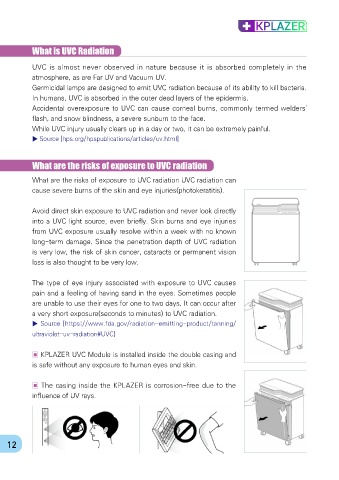
            ▣ KPLAZER UVC Module is installed inside the double casing and
            is safe without any exposure to human eyes and skin.


            ▣ The casing inside the KPLAZER is corrosion-free due to the

            influence of UV rays.


   12

