


Page 21 - ebook
P. 21
Inhibition of glucose 6-phosphate dehydrogenase alleviates pulmonary Inhibition of glucose 6-phosphate dehydrogenase alleviates pulmonary
                                                       fibrosis
                                                       f i b r o s i s
                                                         a
                                                        Hak Su Kim
                                                            S
                                                            u
                                                        H
                                                          k
                                                              K
                                                               i
                                                               m

                      Veterans Medical Research Institute, Veterans Health Service Medical Center, Seoul, Republic of Korea
                      V e t e r a n s   M e d i c a l   R e s e a r c h   I n s t i t u t e ,   V e t e r a n s   H e a l t h   S e r v i c e   M e d i c a l   C e n t e r ,  S e o u l ,   R e pu bl i c   o f   K o r e a
                                     BACKGROUND                                                      AIM
   Pentose phosphate (PP) pathway is one of the major metabolic pathways associated with glucose  This study aims to investigate the
   metabolism. Glucose 6-phosphate dehydrogenase (G6PD) is a rate-limiting enzyme of PP pathway and its  role of G6PD in idiopathic pulmonary
   function is inhibited by 6-aminonicotinamide (6-AN). However, the role of PP pathway in idiopathic  fibrosis (IPF).
   pulmonary fibrosis (IPF) remain unexplored.
                                                       METHODS
    The metabolites of PP pathway were analyzed with Agilent 7890/5975 GC/MSD system and HP-5 MS column in the human lung tissues. The roles
    of G6PD were evaluated using fibrotic markers in fibroblasts or epithelial cells treated with transforming growth factor-β1 (TGF-β1). The antifibrotic
    role of 6-AN was assessed in a bleomycin-induced lung fibrosis mice model. The levels of proteins in cell lysates or tissues were measured by
    western blot assays or RT-PCR.
                                                        RESULTS
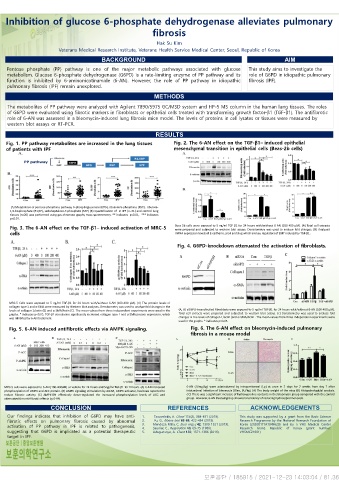
   Fig. 1. PP pathway metabolites are increased in the lung tissues   Fig. 2. The 6-AN effect on the TGF-β1– induced epithelial
   of patients with IPF                                       mesenchymal transition in epithelial cells (Beas-2b cells)


     (A) Metabolites of pentose phosphate pathway, 6-phosphogluconate (6PG), ribulose-5-phosphate (R5P), ribulose-
     1,5-bisphosphate (R1,5P), sedoheptulose-7-phosphate (S7P) (B) Quantification of in IPF (n=31) and control lung
     tissues (n=20) was performed using gas chromato graphy-mass spectrometry. ** indicates p<0.01, *** indicates
     p<0.01.
     Fig. 3. The 6-AN effect on the TGF-β1– induced activation of MRC-5   Beas-2b cells were exposed to 5 ng/ml TGF-β1 for 24 hours with/without 6-AN (100-400 μM). (A) Total cell extracts
                                                              were prepared and subjected to western blot assays. Densitometry was used to analyze fold changes. (B) Analyzed
     cells                                                    mRNA expression levels of E-cadherin, snail and slug which are key regulators of EMT induced by TGF-β1.
                                                               Fig. 4. G6PD-knockdown attenuated the activation of fibroblasts.


    MRC-5 Cells were exposed to 5 ng/ml TGF-β1 for 24 hours with/without 6-AN (100-400 μM). (A) The protein levels of
    collagen type 1 and α-SMA were measured by Western blot analyses. Densitometry was used to analyze fold changes in the
    levels of collagen 1/actin (B) and α-SMA/Actin (C). The mean values from three independent experiments were used in the  (A, B) siG6PD-treansfectied fibroblasts were exposed to 5 ng/ml TGF-β1 for 24 hours with/without 6-AN (100-400 μM).
    graphs. * indicates p<0.05. TGF-β1 stimulation significantly increased collagen type 1 and α-SMA protein expression, which  Total cell extracts were prepared and subjected to western blot assays. (c) Densitometry was used to analyze fold
    was inhibited by 6-AN treatment.                            changes in the levels of collagen 1/actin (and α-SMA/Actin . The mean-values from three independent experiments were
                                                                used in the graphs. * indicates p<0.05
    Fig. 5. 6-AN induced antifibrotic effects via AMPK signaling.   Fig. 6. The 6-AN effect on bleomycin-induced pulmonary
                                                                    fibrosis in a mouse model


   MRC-5 cells were exposed to 6-AN (100-400uM) or vehicle for 24 hours and 5ng/ml TGF-β1 for 1 hours. (A) 6-AN increased  6-AN (10mg/kg) were administered by intraperitoneal (i.p) at once in 2 days for 2 weeks from day 7 after
   phosphorylation of AMPK and ACC protein. (B) AMPK signaling stimulation by AICAR, AMPK activator, has been reported to  intatracheal infection of bleomycin (Bleo, 3U/kg). (A) The body weight of the mice (B) Histopahologiclal analysis.
   reduce fibrotic activity. (C) AMPK-DN effectively down-regulated the increased phosphorylation levels of ACC and  ( C) There was a significant increase of hydroxyproline contents in the bleomycin group compared with the control
   attenuated the anti-fibrotic effects by 6-AN.                   group. However, 6-AN treated group showed a tendency of reducing hydroxyproline levels.
                   CONCLUSION                               REFERENCES                   ACKNOWLEDGEMENTS
    Our findings indicate that inhibition of G6PD may have anti-  1.  Tzouvelekis, A. Chest 156(2), 383-391 (2019).  This study was supported by a grant from the Basic Science
    fibrotic effects on pulmonary fibrosis caused by abnormal  2.  Yu, G., Matrix biol 68-69, 422-434 (2018).  Research Programme by the National Research Foundation of
    activation of PP pathway in IPF is related to pathogenesis,  3.  Mendoza-Milla, C. Euro resp j 42, 1309-1321 (2013).  Korea (2020R1F1A1049629) and by a VHS Medical Center
                                                   4.  Saunier, C., Respiration 40, 69-75 (1980).  Research  Grant,  Republic  of  Korea  (grant  number:
    suggesting that G6PD is implicated as a potential therapeutic  5.  Adegunsoye, A. Chest 150, 1371-1386 (2016).  VHSMC21001)
    target in IPF.

