


Page 3 - Y. Vascular biology
P. 3
The vasodilatory effect of gemigliptin via activation of voltage-dependent
K channels and SERCA pumps in aortic smooth muscle
+
Hee Seok Jung, Won Sun Park
Department of Physiology, Kangwon National University School of Medicine, Chuncheon, South Korea
Introduction
With the increasing prevalence of diabetes, there is growing pressure on public health resources for diabetes treatment. Cardiovascular disease is a significant complication of type 2
diabetes mellitus (DM) and is the primary cause of mortality in patients with type 2 DM. Most diabetic patients take oral medication to treat type 2 DM. A variety of antidiabetic treatment options
are available, including sulfonylureas, dipeptidyl peptidase-4 (DPP-4) inhibitors, thiazolidinediones, meglitinides, glucagon-like peptide-1 (GLP-1) agonists, and sodium glucose co-transporter 2
(SGLT2) inhibitors. DPP-4 inhibitors are an effective antidiabetic drug that reduce blood glucose by increasing GLP-1 levels, thereby stimulating insulin secretion. Gemigliptin is a potent
selective and long-acting DPP-4 inhibitor that is used in clinical treatment in many countries. Gemigliptin lowers albuminuria, which benefits patients with renal insufficiency, particularly older
adults. Given the significance of cardiovascular complications in patients with diabetes, many studies have investigated the cardiovascular safety of antidiabetics. Previous studies have shown
that gemigliptin plays a protective role in cardiovascular diseases through the inhibition of ER-stress-induced apoptosis and inflammation in cardiomyocytes. Furthermore, gemigliptin has a
protective effect on the proliferation and migration of vascular smooth muscle cells via Nrf2 activation. One area yet to be studied is the effects of gemigliptin on vascular contractility and the
associated regulatory factors.
Maintenance of vascular tone is critical for vascular function, and improving vascular contractility is often necessary when treating vascular diseases. Potassium (K ) channels are
+
expressed in vascular smooth muscle cells and play a key role in vascular tone regulation. There are four type of K channels in vascular smooth muscle cells: 1) inwardly rectifying K (Kir), 2)
+
+
voltage-dependent K (Kv), 3) large-conductance Ca -activated K (BK ), and 4) ATP-sensitive K (K ATP ) channels. Kv channels, which are most prevalent in vascular cells, are known as
+
+
2+
+
Ca
important channels for controlling vascular tone. An effective Kv channel inhibitor, 4-aminopyridine (4-AP), induced vasoconstriction in some arteries, suggesting that Kv channels in vascular
smooth muscle may be an important therapeutic target for treating cardiovascular diseases such as hypertension, hypoxia, and diabetes.
In this study, the vasodilatory effects of gemigliptin via activation of Kv channels and sarcoplasmic/endoplasmic reticulum Ca -ATPase (SERCA) pumps were investigated. The study
2+
findings may broaden the clinical application of gemigliptin, specifically in patients with cardiovascular complications from type 2 DM.
Material and Methods
1. Vessel preparation and measurement
Rabbit aortic smooth muscle
Result
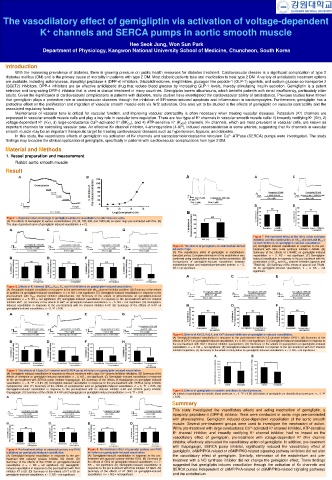
Figure 1. Representative recordings of gemigliptin-induced vasodilation in rabbit thoracic aorta.
(A) The effects of Gemigliptin at various concentrations (10, 30, 100, 300, and 1000 μM) on aortic rings pre-contracted with Phe. (B)
The dose-dependent curve of gemigliptin-induced vasodilation. n = 12.
Figure 7. Pre-treatment effect of the nitric oxide synthase
inhibitor, and the combination of SK Ca channel and IK Ca c
hannel inhibitors, on gemigliptin-induced vasodilation.
Figure 6. The effects of gemigliptin on endothelium-denud (A) Gemigliptin-induced vasodilation in response to the pre-
ed aortic rings. treatment with nitric oxide synthase inhibitor L-NAME. (B)
(A) The vasodilatory effect of gemigliptin in endothelium- Summary of the effects of L-NAME on gemigliptin-induced
denuded aortas. Complete elimination of the endothelium was vasodilation. n = 5. NS = not significant. (C) Gemigliptin-
confirmed using acetylcholine to induce further constriction. (B) induced vasodilation in response to the pre-treatment with the
Comparisons of gemigliptin-induced vasodilation between combination of SK Ca and IK Ca channel inhibitors (apamin and
endothelium-intact and endothelium-denuded arteries. n = 5. TRAM-34). (D) Summary of the effects of apamin and TRAM-
NS = not significant. 34 on gemigliptin-induced vasodilation. n = 4. NS = not
significant.
Figure 2. Effects of K channel (BK , K ATP , K , and Kv) inhibitors on gemigliptin-induced vasodilation.
+
Ca
ir
(A) Gemigliptin-induced vasodilation in response to the pre-treatment with BK Ca channel inhibitor paxilline. (B) Summary of the effects
of paxilline on gemigliptin-induced vasodilation. n = 6. NS = not significant. (C) Gemigliptin-induced vasodilation in response to the
pre-treatment with K ATP channel inhibitor glibenclamide. (D) Summary of the effects of glibenclamide on gemigliptin-induced
vasodilation. n = 5. NS = not significant. (E) Gemigliptin-induced vasodilation in response to the pre-treatment with Kir channel
inhibitor Ba . (F) Summary of the effects of Ba 2+ on gemigliptin-induced vasodilation. n = 5. NS = not significant. (G) Gemigliptin-
2+
induced vasodilation in response to the pre-treatment with Kv channel inhibitor 4-AP. (H) Summary of the effects of 4-AP on
gemigliptin-induced vasodilation. n = 5. *P < 0.05.
Figure 8. Effects of Kv1.5, Kv2.1, and Kv7 channel inhibitors on gemigliptin-induced vasodilation.
(A) Gemigliptin-induced vasodilation in response to the pre-treatment with Kv1.5 channel inhibitor DPO-1. (B) Summary of the
effects of DPO-1 on gemigliptin-induced vasodilation. n = 4. NS = not significant. (C) Gemigliptin-induced vasodilation in response to
the pre-treatment with Kv2.1 channel inhibitor guangxitoxin. (D) Summary of the effects of guangxitoxin on gemigliptin-induced
vasodilation. n = 4. NS = not significant. (E) Gemigliptin-induced vasodilation in response to the pre-treatment with Kv7 channel
inhibitor linopirdine. (F) Summary of the effects of linopirdine on gemigliptin-induced vasodilation. n = 4. NS = not significant.
Figure 3. The effects of L-type Ca 2+ channel and SERCA pump inhibitors on gemigliptin-induced vasodilation.
(A) Gemigliptin-induced vasodilation in response to the pre-treatment with L-type Ca 2+ channel inhibitor nifedipine. (B) Summary of the
effects of nifedipine on gemigliptin-induced vasodilation. n = 4. NS = not significant. (C) Gemigliptin-induced vasodilation in response
to the pre-treatment with SERCA pump inhibitor thapsigargin. (D) Summary of the effects of thapsigargin on gemigliptin-induced
vasodilation. n = 6. *P < 0.05. (E) Gemigliptin-induced vasodilation in response to the pre-treatment with SERCA pump inhibitor
cyclopiazonic acid. (F) Summary of the effects of cyclopiazonic acid on gemigliptin-induced vasodilation. n = 6. *P < 0.05. (G)
Gemigliptin-induced vasodilation in response to the pre-treatment with Kv channel inhibitor 4-AP and SERCA pump inhibitor Figure 9. Effects of gemigliptin on systolic and diastolic blood pressure.
thapsigargin. (H) Summary of the effects of 4-AP and thapsigargin on gemigliptin-induced vasodilation. n = 5. *P < 0.05.
(A) Effects of gemigliptin on systolic blood pressure. n = 4. *P < 0.05. (B) Effects of gemigliptin on diastolic blood pressure. n = 4. *P
< 0.05.
Summary
This study investigated the vasodilatory effects and acting mechanism of gemigliptin, a
dipeptidyl peptidase-4 (DPP-4) inhibitor. Tests were conducted in aortic rings pre-contracted
with phenylephrine. Gemigliptin induced dose-dependent vasodilation of the aortic smooth
muscle. Several pre-treatment groups were used to investigate the mechanism of action.
While pre-treatment with large-conductance Ca -activated K channel inhibitor, ATP-sensitive
+
2+
K channel inhibitor, and inwardly rectifying K channel inhibitor, had no impact on the
+
+
vasodilatory effect of gemigliptin, pre-treatment with voltage-dependent K + (Kv) channel
inhibitor, effectively attenuated the vasodilatory action of gemigliptin. In addition, pre-treatment
with thapsigargin, SERCA pump inhibitor, significantly reduced the vasodilatory effect of
Figure 4. Pre-treatment effect of adenylyl cyclase and PKA Figure 5. Pre-treatment effect of guanylyl cyclase and PKG gemigliptin. cAMP/PKA-related or cGMP/PKG-related signaling pathway inhibitors did not alter
inhibitors on gemigliptin-induced vasodilation. inhibitors on gemigliptin-induced vasodilation.
(A) Gemigliptin-induced vasodilation in response to the pre- (A) Gemigliptin-induced vasodilation in response to the pre- the vasodilatory effect of gemigliptin. Similarly, elimination of the endothelium and pre-
treatment with adenylyl cyclase inhibitor SQ 22536. (B) treatment with guanylyl cyclase inhibitor ODQ. (B) Summary of treatment with a NO synthase inhibitor did not change the gemigliptin effect. These findings
Summary of the effects of SQ 22536 on gemigliptin-induced the effects of ODQ on gemigliptin-induced vasodilation. n = 7.
vasodilation. n = 7. NS = not significant. (C) Gemigliptin- NS = not significant. (C) Gemigliptin-induced vasodilation in suggested that gemigliptin induces vasodilation through the activation of Kv channels and
induced vasodilation in response to the pre-treatment with PKA response to the pre-treatment with PKG inhibitor KT 5823. (D) SERCA pumps independent of cAMP/PKA-related or cGMP/PKG-related signaling pathways
inhibitor KT 5720. (D) Summary of the effects of KT 5720 on Summary of the effects of KT 5823 on gemigliptin-induced
gemigliptin-induced vasodilation. n = 7. NS = not significant. vasodilation. n = 7. NS = not significant. and the endothelium.

