


Page 21 - Y. Vascular biology
P. 21
Gut microbiota and Liver Transcriptome underlying
                                  Sexual Dimorphism of Atherosclerosis
                    in a Hyperlipidemic Diversity Outbred F1 Mouse Population
                                                               2
                                                                            2
                                                     2
                         Myungsuk Kim 1,2 , M. Nazmul Huda , Excel Que , Erik R. Gertz , Brian J. Bennett 1,2
                                    1 Department of Nutrition, University of California, Davis 95616,
                                    2 Western Human Nutrition Research Center, Davis, CA 95616
   BACKGROUNDS & AIMS                                 STUDY DESIGN & METHODS
   BACKGROUNDS                                       We collected offspring (238 female and
   Atherosclerosis is a complex multifactorial disease that develops  234 male mice) from a cross between
   through the interaction of various genetic and environmental  transgenic male C57BL/6J mice, which
   factors. Differences in atherosclerosis by sex have been well  were  made  susceptible  to
   documented  and altered  gut microbiota and liver gene  atherosclerosis  by  microinjection  of
   expressions have been associated with atherosclerosis. However,  human  apolipoprotein  E-Leiden  and
   how sex influences the pathogenesis of atherosclerosis mediated  cholesterol ester transfer protein genes,
   by gut microbiota and liver transcripts is unclear.  and ~200 female DO mice, a population
   AIMS                                              derived from 8 inbred strains. We fed
   We hypothesized that the association between gut microbial  the offspring a high fat/cholesterol diet
    .  profiles, liver transcriptome, and atherosclerosis demonstrates  for 12 weeks. We then examined over
   sexual dimorphism. In order to test this hypothesis, we studied  30  cardio-metabolic  traits,  fecal
   sexual dimorphism in cardio-metabolic traits, gut microbiota, and  microbiota compositions using 16S rRNA
   liver gene expression using 470 hyperlipidemic Diversity Outbred  gene sequencing, and global liver gene
   (DO) mice.                                        expression using RNA-sequencing.
    RESULTS

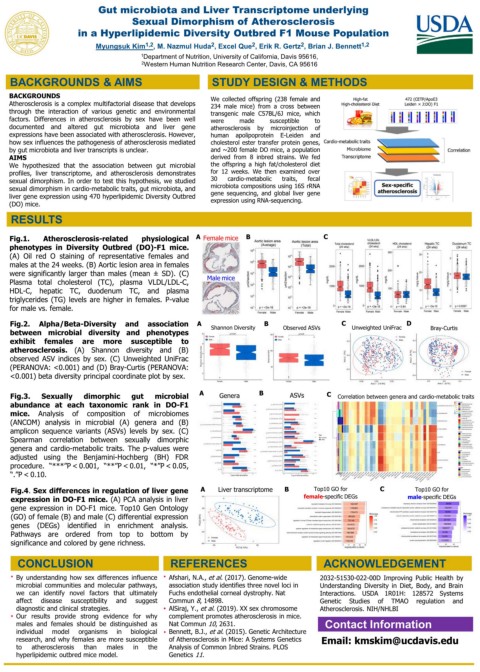
   Fig.1.   Atherosclerosis-related  physiological  A  Female mice  B            C
   phenotypes in Diversity Outbred (DO)-F1 mice.
   (A) Oil red O staining of representative females and
   males at the 24 weeks. (B) Aortic lesion area in females
   were significantly larger than males (mean ± SD). (C)
   Plasma total cholesterol (TC), plasma VLDL/LDL-C,  Male mice
   HDL-C,  hepatic  TC,  duodenum  TC,  and  plasma
   triglycerides (TG) levels are higher in females. P-value
   for male vs. female.
   Fig.2.  Alpha/Beta-Diversity  and  association  A              B                   C               D
   between microbial diversity and phenotypes        Shannon Diversity  Observed ASVs   Unweighted UniFrac  Bray-Curtis
   exhibit  females  are  more   susceptible  to
   atherosclerosis. (A) Shannon diversity and (B)
   observed ASV indices by sex. (C) Unweighted UniFrac
   (PERANOVA: <0.001) and (D) Bray-Curtis (PERANOVA:
   <0.001) beta diversity principal coordinate plot by sex.

   Fig.3.  Sexually   dimorphic   gut  microbial  A    Genera    B       ASVs     C  Correlation between genera and cardio-metabolic traits
   abundance at each taxonomic rank in DO-F1
   mice.  Analysis  of  composition  of  microbiomes
   (ANCOM) analysis in microbial (A) genera and (B)
   amplicon sequence variants (ASVs) levels by sex. (C)
   Spearman correlation between sexually dimorphic
   genera and cardio-metabolic traits. The p-values were
   adjusted using the Benjamini-Hochberg (BH) FDR
   procedure. “***”P < 0.001, “**”P < 0.01, “*”P < 0.05,
   “.”P < 0.10.
    Fig.4. Sex differences in regulation of liver gene  A  Liver transcriptome  B  Top10 GO for   C     Top10 GO for
    expression in DO-F1 mice. (A) PCA analysis in liver                     female-specific DEGs      male-specific DEGs
    gene expression in DO-F1 mice. Top10 Gen Ontology
    (GO) of female (B) and male (C) differential expression
    genes  (DEGs)  identified  in  enrichment  analysis.
    Pathways are ordered from top to bottom by
    significance and colored by gene richness.

     CONCLUSION                            REFERENCES                            ACKNOWLEDGEMENT

     By understanding how sex differences influence  Afshari, N.A., et al. (2017). Genome-wide   2032-51530-022-00D Improving Public Health by
     microbial communities and molecular pathways,  association study identifies three novel loci in   Understanding Diversity in Diet, Body, and Brain
     we can identify novel factors that ultimately  Fuchs endothelial corneal dystrophy. Nat   Interactions. USDA 1R01H: 128572 Systems
     affect  disease  susceptibility  and  suggest  Commun 8, 14898.            Genetic  Studies  of  TMAO  regulation  and
     diagnostic and clinical strategies.   AlSiraj, Y., et al. (2019). XX sex chromosome   Atherosclerosis. NIH/NHLBI
     Our results provide strong evidence for why  complement promotes atherosclerosis in mice.
     males and females should be distinguished as  Nat Commun 10, 2631.           Contact Information
     individual  model  organisms  in  biological  Bennett, B.J., et al. (2015). Genetic Architecture
     research, and why females are more susceptible  of Atherosclerosis in Mice: A Systems Genetics   Email: kmskim@ucdavis.edu
     to  atherosclerosis  than  males  in  the  Analysis of Common Inbred Strains. PLOS
     hyperlipidemic outbred mice model.    Genetics 11.

