


Page 1 - I. Chemical biology and drug discovery
P. 1
Target deconvolution using label-free method of autophagy inhibitor and its antitumor activity in
glioblastoma
Hui-Yun Hwang , Yoon Sun Cho , Jin Young Kim , Ki Na Yun , Jong Shin Yoo , Eunhyeong Lee , Injune Kim , György Marko-Varga 1,4 and Ho Jeong Kwon *
2
3
3
2
1
1
1
2
1 Chemical Genomics Global Research Laboratory, Department of Biotechnology, College of Life Science & Biotechnology, Yonsei University, Seoul 120-749, Korea 2 Biomedical Omics
Group, Korea Basic Science Institute, Ochang, Chungbuk 28119, Korea 3 Biomedical Science and Engineering Interdisciplinary Program, Korea Advanced Institute of Science and
Technology, Daejeon, Korea 4 Clinical Protein Science & Imaging, Department of Biomedical Engineering, Lund University, BMC D13, SE-221 84 Lund, Sweden
*Corresponding author: kwonhj@yonsei.ac.kr
BACKGROUND AIM
Manipulating autophagy is a promising strategy for treating cancer as To identify protein targets and uncover the unknown mechanisms
several autophagy inhibitors are shown to induce autophagic cell death. of APZ, we used a label-free drug affinity responsive target stability
(DARTS) approach with a liquid chromatography/tandem mass
One of these, autophagonizer (APZ), induces apoptosis-independent spectrometry (LC–MS/MS) readout. Collectively, our study
cell death by binding an unknown target via an unknown mechanism in demonstrated that APZ, a new autophagy inhibitor, can be used as
vitro & in vivo. We identified Hsp70 as a key target protein of unmodified a potent antitumor drug candidate to get over unassailable glioma
APZ in autophagy. and revealed a novel function of Hsp70 in lysosomal integrity
regulation of autophagy.
METHODS
Combined drug affinity responsive target stability (DARTS) and LC−MS/MS method
identified a new protein target of APZ. (1) Exposure of the small molecule to proteins
in the cell lysate proteome pool, to allow for small molecule–protein target
interactions, (2) pronase digestion of proteins unprotected by the small molecule,
where proteins that bind resist protease treatment while proteins with little or no
binding to the small molecule are degraded, (3) further proteolysis with trypsin and
LC–MS/MS analysis of resulting peptides to determine sequence coverage, (4)
identification of proteins protected by the small molecule based on its enhanced
sequence coverage by more than 3% compared to controls, and (5) selection of likely
protein targets based on candidates with phenotypic relevancy to the small molecule.
RESULTS
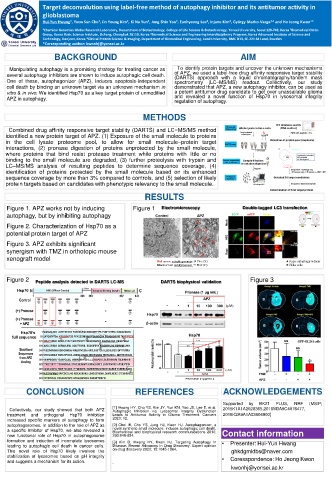
Figure 1. APZ works not by inducing Figure 1 Electromicroscopy Double-tagged LC3 transfection
autophagy, but by inhibiting autophagy
Figure 2. Characterization of Hsp70 as a
potential protein target of APZ
Figure 3. APZ exhibits significant
synergism with TMZ in orthotopic mouse
xenograft model Red arrow: autophagosomes Flux (X) ★ Rapa: autophagy inducer
Black arrow: autolysosomes Flux (O) ★ HeLa cells
Figure 2 Peptide analysis detected in DARTS LC-MS DARTS biophysical validation Figure 3
GFP-GL261 cells
CONCLUSION REFERENCES ACKNOWLEDGEMENTS
Supported by BK21 PLUS, NRF (MSIP;
Collectively, our study showed that both APZ [1] Hwang HY, Cho YS, Kim JY, Yun KN, Yoo JS, Lee E, et al. 2015K1A1A2028365,2018M3A9C4076477,
Autophagic Inhibition via Lysosomal Integrity Dysfunction
treatment and orthogonal Hsp70 inhibition Leads to Antitumor Activity in Glioma Treatment. Cancers 2016K2A9A1A03904900)
increased specific markers of autophagy to form 2020; 12.
autophagosomes. In addition to the role of APZ as [2] Choi IK, Cho YS, Jung HJ, Kwon HJ. Autophagonizer, a
a specific inhibitor of Hsp70, we also revealed a novel synthetic small molecule, induces autophagic cell death. Contact information
Biochemical and biophysical research communications 2010;
new functional role of Hsp70 in autophagosome 393:849-854.
formation and induction of incomplete lysosomes [3] Kim D, Hwang HY, Kwon HJ. Targeting Autophagy In • Presenter: Hui-Yun Hwang
leading to autophagic cell death in cancer cells. Disease: Recent Advances In Drug Discovery. Expert opinion
This novel role of Hsp70 likely involves the on drug discovery 2020; 15:1045-1064. ghkdgmldbs@naver.com
stabilization of lysosomes based on pH integrity • Coresspondence: Ho Jeong Kwon
and suggests a mechanism for its action. .
kwonhj@yonsei.ac.kr Presenter :
Minjeong Ko

