


Page 2 - ebook
P. 2
What is a Virus


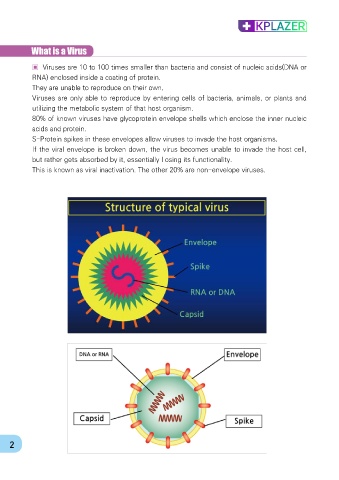
            ▣  Viruses are 10 to 100 times smaller than bacteria and consist of nucleic acids(DNA or
            RNA) enclosed inside a coating of protein.
            They are unable to reproduce on their own.
            Viruses are only able to reproduce by entering cells of bacteria, animals, or plants and

            utilizing the metabolic system of that host organism.
            80% of known viruses have glycoprotein envelope shells which enclose the inner nucleic
            acids and protein.
            S-Protein spikes in these envelopes allow viruses to invade the host organisms.

            If the viral envelope is broken down, the virus becomes unable to invade the host cell,
            but rather gets absorbed by it, essentially l osing its functionality.
            This is known as viral inactivation. The other 20% are non-envelope viruses.


    2

