


Page 75 - ebook
P. 75
UNIVERSITY OF ULSAN USP14 Inhibition Regulates Tumorigenesis by
COLLEGE OF MEDICINE Inducing Apoptosis in gastric Cancer In Vitro
Mi Yea Lee , and Peter Chang-Whan Lee 1
1
1 Department of Biomedical Sciences, University of Ulsan College of Medicine, Asan
Medical Center, Seoul, 05505, Korea
Abstract
Deubiquitinase enzymes (DUBs), an essential component of the UPS, trim ubiquitin from substrate proteins, therefore preventing proteins from degradation
and modulating different cellular processes. Ubiquitin-specific protease 14 (USP14), one of the DUBs, has been mainly studied for its role in tumorigenesis of
several cancers. In the present study, we found that the protein levels of USP14 were remarkably higher on gastric cancer tissues compared to adjacent normal
tissues. We also demonstrated that inhibition of USP14 by IU1 (an USP14 inhibitor) or USP14-specific siRNA significantly reduced cell viability, migratory
and invasive capability of gastric cancer cells. Diminished cell proliferation come from increased apoptotic cells, and it was due to higher expression of
cleaved caspase-3 and cleaved PARP levels. Collectively, these findings indicated the critical roles of USP14 in gastric tumor progression, suggesting its
potential as a novel cancer therapeutic target.
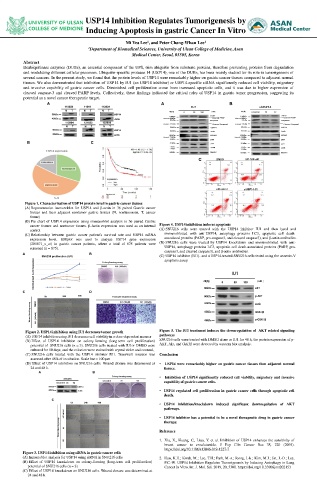
Figure 1. Characterization of USP14 protein level in gastric cancer tissues
(A) Representative immunoblot for USP14 and β-actin in 36 paired Gastric cancer
tissues and their adjacent nontumor gastric tissues (N, nontumorous, T, cancer
tissue)
(B) Pie chart of USP14 expression using immunoblot analysis in 36 paired Gastric
cancer tissues and nontumor tissues. β-Actin expression was used as an internal Figure 4. USP14 inhibition induces apoptosis
control (A) SNU216 cells were treated with the USP14 inhibitor IU1 and then lysed and
(C) Relationship between gastric cancer patient’s survival rate and USP14 mRNA immunoblotted with anti-USP14, autophagy proteins LC3, apoptotic cell death-
expression level. KMplot was used to analyze USP14 gene expression associated proteins (PARP, pro-caspase3, and cleaved caspase3), and β-actin antibodies.
(201671_x_at) in gastric cancer patients, where a total of 875 patients were (B) SNU216 cells were treated by USP14 knockdown and immunoblotted with anti-
screened (n = 875). USP14, autophagy proteins LC3, apoptotic cell death-associated proteins (PARP, pro-
caspase3, and cleaved caspase3), and β-actin antibodies.
(C) USP14 inhibitor (IU1)- and siUSP14-treated SNU216 cells tested using the annexin-V
apoptosis assay.
Figure 2. USP14 inhibition using IU1 decreases tumor growth Figure 5. The IU1 treatment induces the downregulation of AKT related signaling
(A) USP14 inhibition using IU1 decreases cell viability in a dose-dependent manner pathways
(B) Effect of USP14 inhibition on colony-forming (long-term cell proliferation) SNU216 cells were treated with DMSO alone or IU1 for 48 h, the protein expression of p-
potential of SNU216 cells (n = 3). SNU216 cells treated with IU1or DMSO were AKT, Akt, and Gsk3β were detected by western blot analysis.
cultured for 10 days, and the colonies were stained with crystal violet and counted,
(C) SNU216 cells treated with the USP14 inhibitor IU1. Transwell invasion was Conclusion
assessed after 48 h of incubation. Scale bar = 100 μm
(D) Effect of USP14 inhibition on SNU216 cells. Wound closure was determined at • USP14 were remarkably higher on gastric cancer tissues then adjacent normal
24 and 48 h. tissues.
• Inhibition of USP14 significantly reduced cell viability, migratory and invasive
capability of gastric cancer cells.
• USP14 regulated cell proliferation in gastric cancer cells through apoptotic cell
death.
• USP14 inhibition/knockdown induced significant downregulation of AKT
pathways.
• USP14 inhibitor has a potential to be a novel therapeutic drug in gastric cancer
therapy.
Reference
1. Xia, X., Huang, C., Liao, Y. et al. Inhibition of USP14 enhances the sensitivity of
breast cancer to enzalutamide. J Exp Clin Cancer Res 38, 220 (2019).
https://doi.org/10.1186/s13046-019-1227-7
Figure 3. USP14 inhibition using siRNAin gastric cancer cells
(A) Immunoblot analysis for USP14 using siRNAin SNU216 cells 2. Han, K.H.; Kwak, M.; Lee, T.H.; Park, M.-s.; Jeong, I.-h.; Kim, M.J.; Jin, J.-O.; Lee,
(B) Effect of USP14 knockdown on colony-forming (long-term cell proliferation) P.C.-W. USP14 Inhibition Regulates Tumorigenesis by Inducing Autophagy in Lung
potential of SNU216 cells (n = 3) Cancer In Vitro. Int. J. Mol. Sci. 2019, 20, 5300. https://doi.org/10.3390/ijms202153
(C) Effect of USP14 knockdown on SNU216 cells. Wound closure was determined at
24 and 48 h.

