


Page 41 - F. Cell biology
P. 41
Carteolol increases hERG current and cardiac action
potential duration
Su-Hyun Jo
Department of Physiology, Institute of Bioscience and Biotechnology, BK21 plus Graduate Program, Kangwon National University
College of Medicine, Chuncheon 200-701, Korea
ABSTRACT A B
Carteolol is a non-selective beta blocker used to treat
glaucoma. We studied the effects of carteolol on a human
K channel, human ether-a-go-go-related gene (hERG),
+
expressed in Xenopus oocytes and on action potential of
guinea pig ventricular myocytes. The hERG encodes the
pore-forming subunits of the rapidly-activating delayed
rectifier K channel in the heart. Mutations in hERG
+
reduce I Kr and cause type 2 long QT syndrome, a disorder C D
that predisposes individuals to life-threatening
arrhythmias. Carteolol increased hERG current amplitude
at the end of the voltage steps and hERG tail currents in a
concentration-dependent manner. Carteolol did not change
the value of V 1/2 for activation curve of hERG tail current,
indicating the drug did not affect activation gating. In
guinea pig ventricular myocytes, carteolol did not change
the action potential amplitude and the resting membrane
potential, however, the drug increased the action potential E
duration (APD , APD , APD ), showing that carteolol
50
90
20
could cause arrhythmogenic effects in cardiac function.
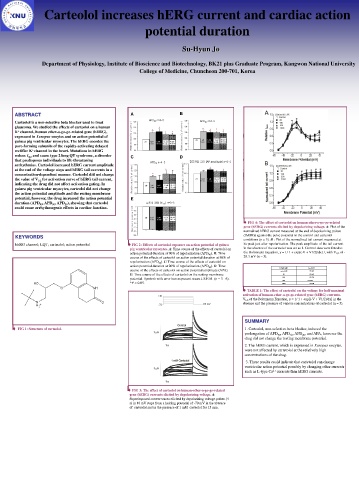
FIG 4: The effect of carteolol on human ether-a-go-go-related
gene (hERG) currents elicited by depolarizing voltage. A: Plot of the
normalized hERG current measured at the end of depolarizing pulses
KEYWORDS (IhERG) against the pulse potential in the control and carteolol
conditions (n = 5). B : Plot of the normalized tail current measured at
hERG channel; LQT; carteolol; action potential FIG 2: Effects of carteolol exposure on action potential of guinea its peak just after repolarization. The peak amplitude of the tail current
pig ventricular myocytes. A: Time course of the effects of carteolol on in the absence of the carteolol was set as 1. Control data were fitted to
action potential duration at 90% of repolarization (APD ). B: Time the Boltzmann Equation, y = 1/ 1 + exp[(-V + V1/2)/dx] /, with V 1/2 of -
90
course of the effects of carteolol on action potential duration at 50% of 20.3 mV (n = 5).
repolarization (APD ). C:Time course of the effects of carteolol on
50
action potential duration at 20% of repolarization (APD ). D: Time
20
course of the effects of carteolol on action potential amplitude (APA). [Drug] (µM) V 1/2 (mV)
-23.249
control (0)
E: Time course of the effects of carteolol on the resting membrane 30 -23.528
potential. Symbols with error bars represent mean ± S.E.M. (n = 3 - 6). 100 -22.756
300
*P < 0.05. 1000 -23.202
-22.939
TABLE 1: The effect of carteolol on the voltage for half-maximal
activation of human-ether-a-go-go-related gene (hERG) currents.
V 1/2 of the Boltzmann Equation, y = 1/ 1 + exp[(-V + V1/2)/dx] in the
absence and the presence of various concentrations of carteolol (n = 5).
SUMMARY
FIG 1: Structure of carteolol. 1. Carteolol, non-selective beta blocker, induced the
prolongation of APD , APD , APD , and APA, however the
50
20
90
drug did not change the resting membrane potential.
2. The hERG current, which is expressed in Xenopus oocytes,
were not affected by cartetolol at the relatively high
concentrations of the drug.
3. These results could indicate that cartetolol can change
ventricular action potential possibly by changing other currents
such as L-type Ca currents than hERG currents.
2+
FIG 3: The effect of carteolol on human-ether-a-go-go-related
gene (hERG) currents elicited by depolarizing voltage. A:
Superimposed current traces elicited by depolarizing voltage pulses (4
s) in 10 mV steps from a holding potential of -70 mV in the absence
of carteolol and in the presence of 1 mM carteolol for 15 min.

